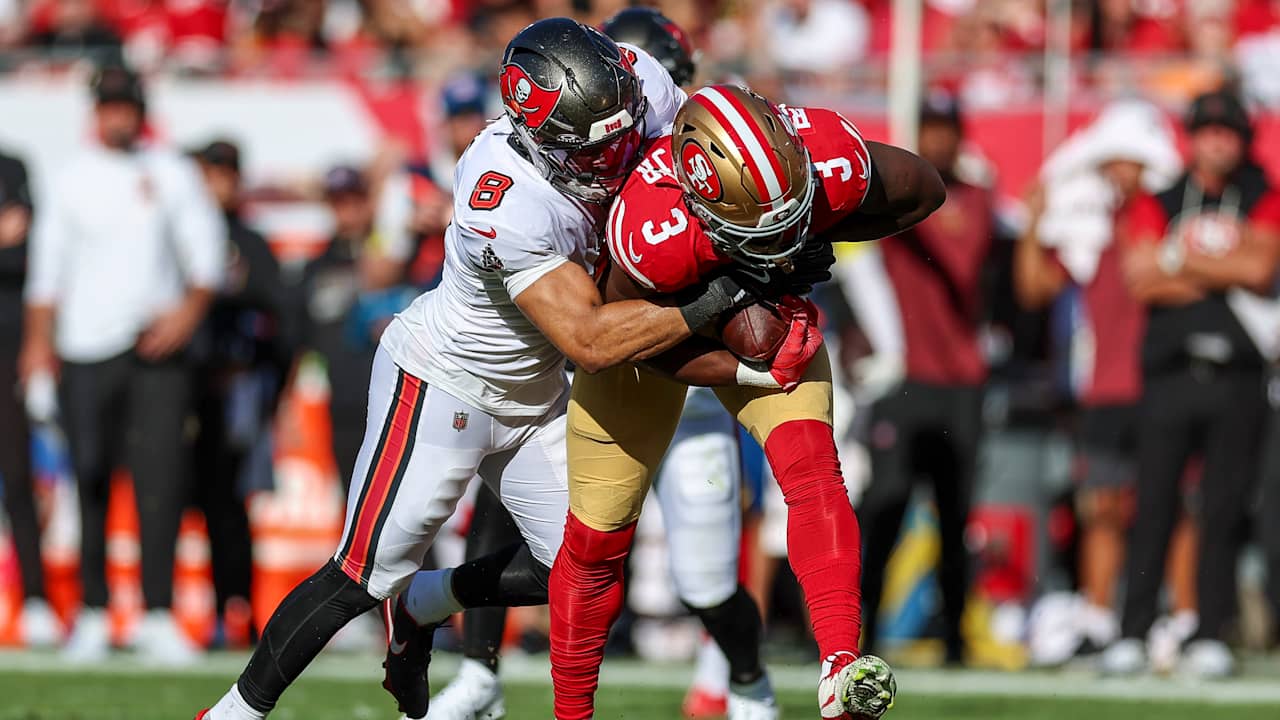

The San Francisco 49ers and Tampa Bay Buccaneers faced off in a high-stakes NFL matchup that showcased contrasting offensive philosophies and individual brilliance. Key performances from both quarterbacks and defensive standouts defined the game’s outcome. Readers exploring san-francisco-49ers-vs-tampa-bay-buccaneers-match-player-stats-breakdown will also find context in cincinnati-reds-vs-mets-match-player-stats – Cincinnati Reds vs Mets Match Player Stats Br
How the 49ers Leveraged Balanced Offense Against Tampa Bay’s Defense
The 49ers entered the game with a reputation for a balanced attack, and their game plan reflected that identity. Quarterback Brock Purdy managed the field effectively, completing short to intermediate passes while minimizing turnovers. His decision-making under pressure allowed San Francisco to sustain drives and control time of possession. wikipedia.org/wiki/List_of_NFL_rivalries” rel=”noopener noreferrer” target=”_blank”>List of NFL rivalries
Running back Christian McCaffrey was instrumental, combining rushing and receiving contributions to keep Tampa Bay’s defense off balance. His ability to break tackles and gain yards after contact provided critical first downs in key situations. On the defensive side, Nick Bosa applied consistent pressure on Baker Mayfield, disrupting timing and forcing hurried throws.
San Francisco’s offensive line held up well against a Buccaneers front that had shown improvement in recent weeks. This protection allowed Purdy to step into throws and avoid sacks, a crucial factor in maintaining rhythm. The 49ers also utilized play-action effectively, creating separation for receivers downfield.
Tampa Bay’s Offensive Struggles and Defensive Adjustments
The Buccaneers relied heavily on Baker Mayfield’s arm, but the 49ers’ secondary limited big plays. Mayfield completed several deep attempts early, but San Francisco adjusted by playing tighter coverage and increasing safety support over the top. This shift reduced explosive gains and forced Tampa Bay into longer drives.
Wide receiver Mike Evans remained a focal point, using his size to win contested catches. However, double coverage in critical moments limited his impact in the red zone. Chris Godwin contributed with reliable hands over the middle, but the lack of a consistent running game made Tampa Bay predictable on early downs.
Defensively, the Buccaneers struggled to contain McCaffrey, particularly in space. Missed tackles and poor gap discipline allowed San Francisco to extend plays and convert on third downs. Lavonte David led the team in tackles, but the unit as a whole failed to generate enough pressure on Purdy.
Key Performances That Defined the Game
Brock Purdy finished with a solid stat line, demonstrating poise beyond his experience. His ability to read coverages and deliver accurate throws under duress kept the 49ers’ offense moving. Christian McCaffrey’s dual-threat capability was on full display, as he consistently gained positive yardage and contributed in the passing game.
On the other side, Baker Mayfield showed flashes of brilliance, especially on deep balls to Evans. However, two interceptions in the second half shifted momentum decisively. One came on a miscommunication with a receiver, while the other resulted from a well-timed jump by 49ers safety Talanoa Hufanga.
Defensive end Nick Bosa recorded multiple quarterback hits and a sack, consistently beating his blocker. His presence forced Mayfield to alter throws and limited Tampa Bay’s ability to establish a rhythm. For the Buccaneers, linebacker Devin White made several key stops but was occasionally caught out of position in coverage.
What Is Confirmed and What Remains Unverified
Brock Purdy’s performance reinforced his role as the team’s starting quarterback. Christian McCaffrey’s all-around production highlighted his value to the offense.
Nick Bosa’s pressure was a consistent factor, and Tampa Bay’s run defense allowed over four yards per carry.
What remains unclear is whether Tampa Bay’s offensive struggles were due to scheme limitations or execution errors. Some analysts suggest the play-calling became too conservative after halftime, while others point to missed assignments. Additionally, the long-term impact of a minor ankle injury sustained by Mike Evans during the third quarter has not been fully assessed.
Similarly, the Buccaneers’ ability to protect Mayfield against elite pass rushes will be tested in upcoming games.
Why This Matchup Matters for Both Teams’ Playoff Hopes
This game served as a litmus test for both franchises as they approach the postseason. For the 49ers, the win demonstrated resilience and adaptability, traits essential for deep playoff runs. Their ability to win without relying solely on explosive plays bodes well against disciplined defenses.
For Tampa Bay, the loss exposed vulnerabilities in both pass protection and red zone efficiency. Addressing these issues will be critical if they hope to compete with top-tier NFC teams. The performance of younger players, particularly on the offensive line, will be closely monitored in the coming weeks.
Looking ahead, both teams face challenging schedules that will further define their playoff trajectories. The 49ers must maintain consistency, while the Buccaneers need to find more balance on offense. This matchup provided valuable insights into each team’s strengths and areas for improvement.
For fans interested in detailed player statistics from similar high-profile matchups, the cincinnati-reds-vs-mets-match-player-stats – Cincinnati Reds vs Mets Match Player Stats Br offers a comparative look at how individual performances shape game outcomes across sports.